sounds of sijjin
an immersive fantasy soundscape based on the folklore of Sufi Islam
by Yenisa Kurtaj
Explore the world of sijjin
Over a decade ago, I came up with the idea of a fictional story that would detail the symbiotic relationships between angels, demons, humans, and jinn. This idea, over time, evolved into the vast and diverse world known as Sijjin – a fictional land heavily inspired by Sufi cultures and pre-Islamic Arab folklore. Eventually, I began writing a light novel which focused on just one continent within the world of Sijjin, detailing the story of the fire-wielding jinn species known as Ifrit. The ideas for color-based nations and their respective leaders and main characters quickly came to mind; but creating a world with consistent lore and a complex framework of interlinked characters proved a challenge.
Thus, I introduce Sounds of Sijjin, a soundscape project that serves as a sonic method of worldbuilding. Within this project are six pieces (five diegetic and one non-diegetic) meant to immerse the listener into the continent of Ard Al’Ifriti, the land in which the main storyline of the light novel takes place. Through the creation and completion of Sounds of Sijjin, I was able to explore ideas of politics between neighboring tribes and shared cultural beliefs, which aligned with the lore within the novel (i.e., tribes with similar musical motifs would prove to be similar in ideology or belief due to shared diaspora).
sufism in sound
Sufi Islam is a unique sect in the sense that sound and listening are encouraged rather than shunned. Listening is so essential to the Sufi practice that it is seen as a ritual – known as Sama – in which singing, instrument playing, dancing, and recitation all contribute to the practice of Dhikr. Through these musical rituals, the instruments and percussion come together to create a transformation of the spirit and psyche – the listeners and their souls are transported to another world, one much more divine than this one. Sufi Islam is also particularly unique in the sense that it incorporates mysticism, often considered forbidden in Sunni and Shia sects. These mystical elements are even further enforced by the fact that every practice of Sufism is a novel experience due to heavy incorporation of the pre-Islamic tales and folklore of the ethnic cultures which engage in the religion.
Growing up as a Sufi Muslim hailing from Prizren, Kosovo; I was all too familiar with the blurred line between cultural tales and holy scripture from the Qur’an. I found it fascinating in my research that many of the same folklore concepts of jinn and demons and powerful spirits came not from the verses of the Qur’an but other related cultures such as Turkey, Lebanon, Syria, Bangladesh, and Iran. Furthermore, these Sufi cultures share strikingly similar musical motifs and soundscapes: the music I heard in my own village of Prizren was no different than the music I heard from the Sufis in the Middle East, South Asia, and Central Asia.
It is important to me that every culture that practices this fascinating sect is represented through the coding of characters and motifs. Seeing as these jinn are non-human in a fantasy world, they lack any explicit race or ethnicity. Despite this, there are design choices in each individual character to signal to a reader the Sufi culture they were inspired from. In this same way, you are encouraged to listen for any real-world cultural motifs within the works of Sounds of Sijjin.
the infernal tribes
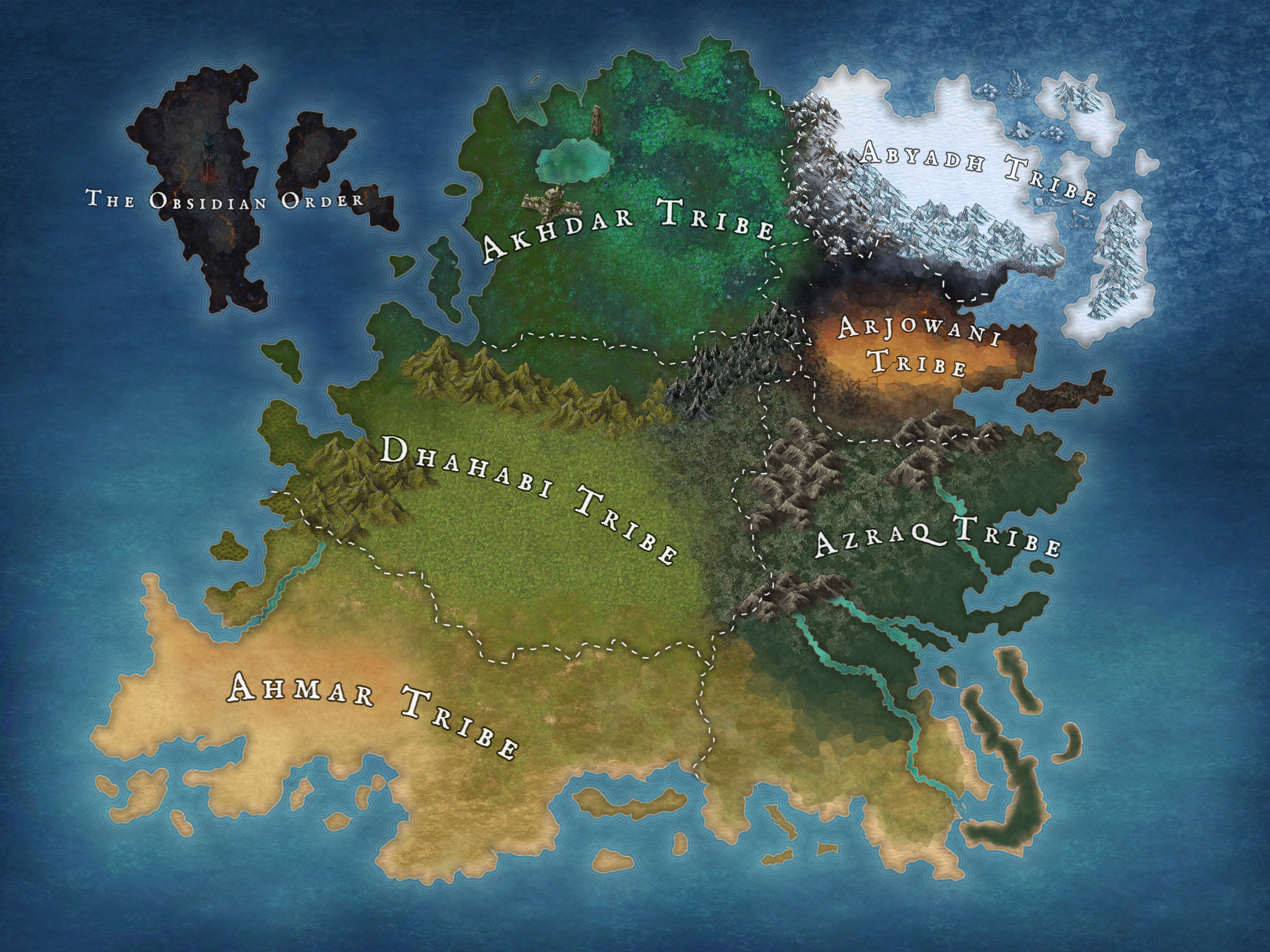
The continent of Ard Al-Ifriti is home to the species of fire-wielding jinn known as Ifrit. These jinn are humanoid in nature, with similar dialects, cultural standards, and appearances. The Ifrit separated themselves into six main tribes based on their own fire color: red, gold, green, blue, purple, and white. Each tribe has a unique makeup of demographics, culture, and politics; but ultimately attempt to maintain peace with one another in otherwise dire times.
The different colors of soulfire often come with their own unique attributes, further exemplifying their cultural norms. The Ahmar, Dhahabi, and Azraq tribes belong to a group known as the Natural Fires – these colors are able to be used in everyday life due to their mild and unimpressive qualities. The Akhdar, Arjowani and Abyadh tribes belong to the group known as the Surreal Fires – in stark contrast to the Natural Fires, these colors wield powerful qualities such as unique chemical makeup that is explosive in nature, fire that performs mimicry of other elements, and fire that burns so hot it mimics the coldness of frostbite.
Scroll below to find out more about the general information about each of the six tribes, as well as listening to the local music of its population.
Ahmar Tribe of Red Fire
Currently in the Crimson Dynasty, the Ahmar Tribe is a monarchy home to a dense population with many large cities and hot flatlands. The Ahmar Ifrit wield red fire, which is reliable for basic use but weak in combat against other Ifrit who possess powerful soulfire. As a result, fighters of the Ahmar Tribe practice physical strength through training and martial arts, while reserving their soulfire powers for everyday activities such as cooking or artistic demonstration. Despite being a monarchy, the citizens of the nation are satisfied with caliph Asad al-Jalila’s focus on maintaining justice, peace, and a bustling economy.
“Blood of the Crimson Lion” is a piece written for the coronation ceremony of Asad al-Jalila, who rose as heir to the throne after the death of his father at a mere fifteen years of age. The people of Ahmar believe that certain music; namely percussive soundscapes lacking melody and harmony; is holy and a transportation of kinship and the psyche, reserved for royalty and celebrations of birth, death, and honor.
Dhahabi Tribe of Gold Fire
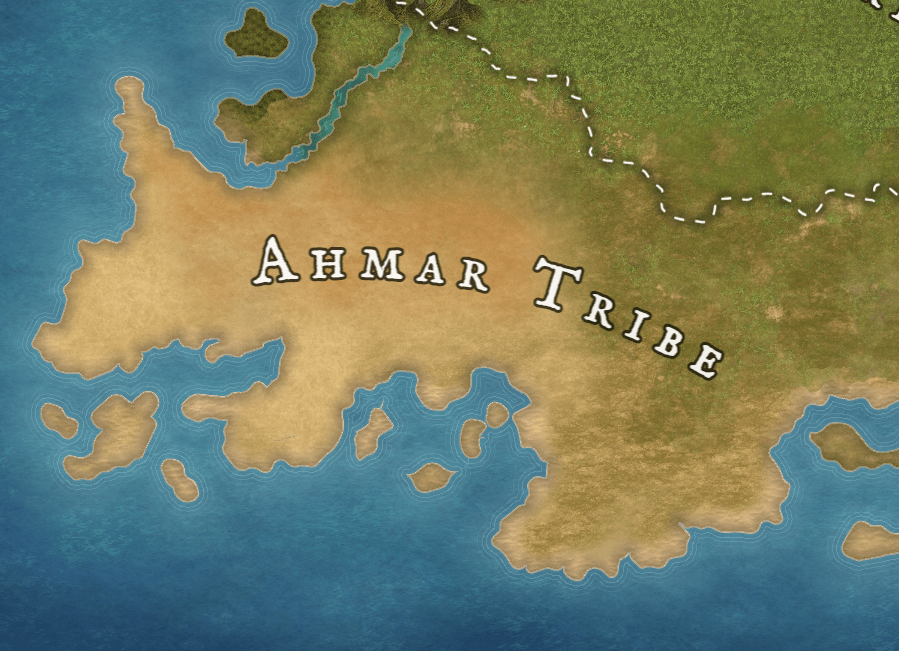
Not necessarily led by any particular ruler or caliph, the Dhahabi Tribe is the largest nation both in terms of size and population. Declared as pacifist for over a hundred years, the Dhahabi Tribe is a democracy with an incredibly diverse demographic. In this nation, art, music, poetry, and entertainment are welcomed and encouraged. It is not uncommon to walk through any of the cities’ streets and find groups of performers playing together, or being able to catch a theatrical performance at any time of day. Despite its lack of corruption, no one knows who the figurehead maintaining the peace of the nation really is.
“The Six Kings” is a piece composed for a popular satirical play by the same name. It boasts a unique collection of instruments, each section representing the six rulers of the tribes.
“Mystical Soulfire” is one of many pieces locally composed and performed by a wider orchestra. Dhahabi music is fond of melody, riffs, and usage of hand-drums and lutes mixed with strings such as cello and viola. These instruments are made highly accessible and affordable for anyone to pick up and learn. Music is seen as a gift to the people, something to be utilized for storytelling, poetry, or cinematic effect, and should never be kept only for the rich or the elite.
Akhdar Tribe of Green Fire
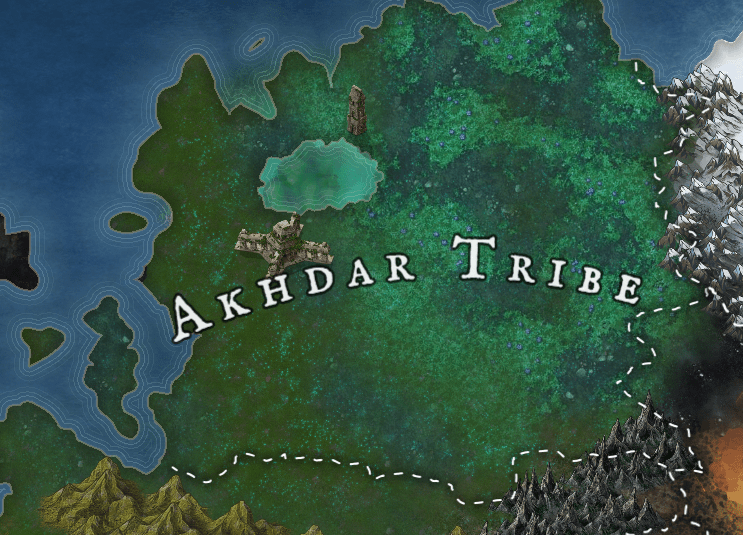
A meritocracy led by Qadir al-Hasud, considered the richest jinn in all six nations. The Akhdar Tribe has a much smaller population than any of the three Natural Fires (Ahmar, Dhahabi, and Azraq) and is responsible for the housing of all economic frameworks. The capital and other cities are often built around waterfalls, cliffs or on the edges of forest and mountain ranges. Home to intricate and dangerous cave systems, the Akhdar Tribe makes their money by the extraction and export of rare elusive minerals and gemstones found deep within the caverns and forests. Fighters of this nation are notoriously powerful, as green fire is explosive and gaseous in nature. Though exceptional as mages, they struggle greatly with physical strength and hand-to-hand combat.
“Lord Hayyah” is a piece commissioned by Qadir al-Hasud and the members of his cabinet. The Akhdar Tribe and its music are closely related to that of the Dhahabi Tribe, with a few major differences: orchestras are double or even triple the size, and instruments are expensive and inaccessible for the average citizen. Rather than jamming together on a street, musicians go to schools sponsored by the caliph in which they study for the rest of their life. Drums include vast complex systems such as series of timpani and davul.
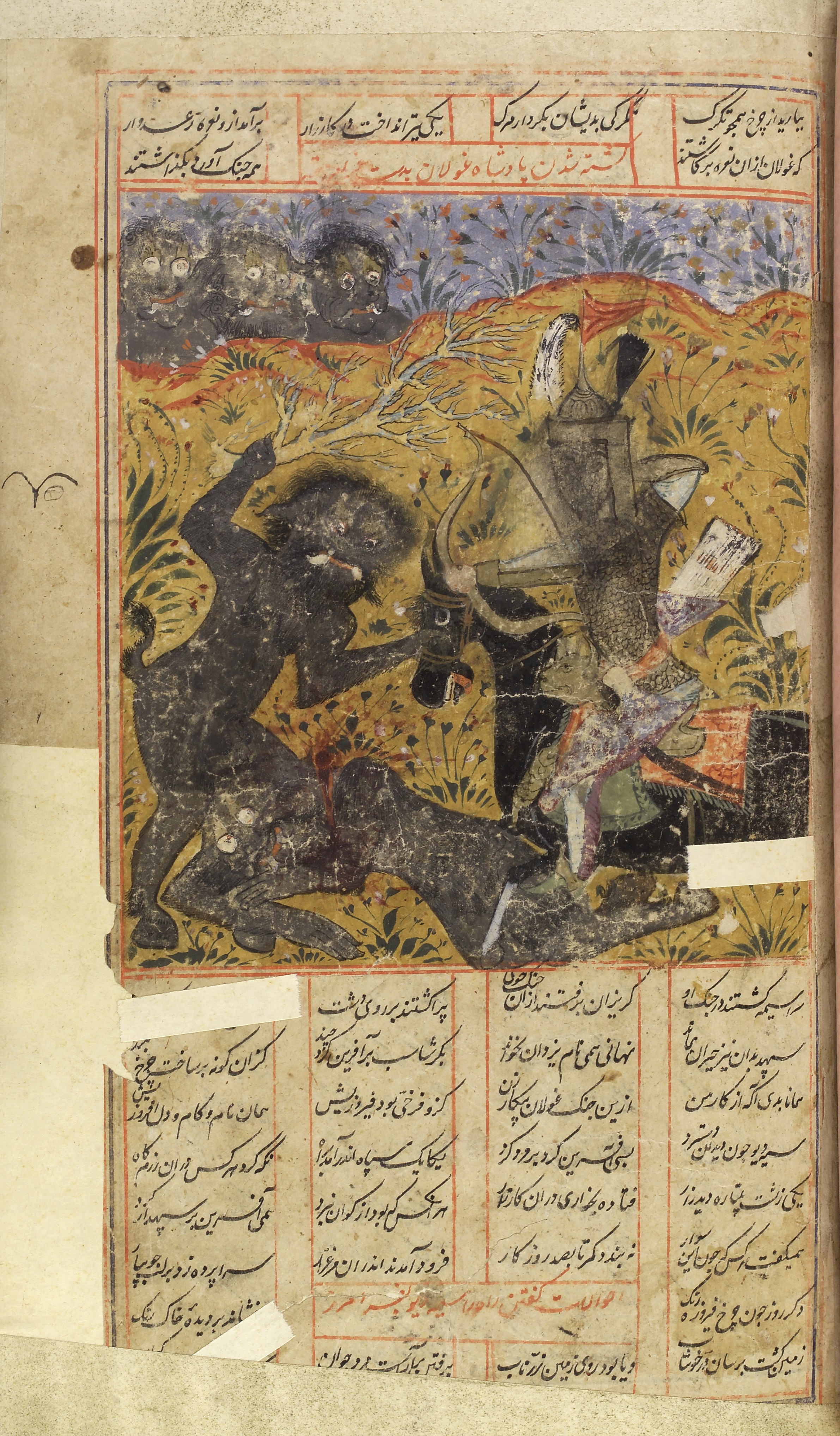
“Forest of the Shahnameh” is a non-diegetic piece representing the fear of walking through the northern forest and getting lost within the cave systems, bordering the Abyadh Tribe. In this desolate region live a plethora of dangerous jinn species such as ghouls, sil’ats, and shapeshifters.
Azraq Tribe of Blue Fire
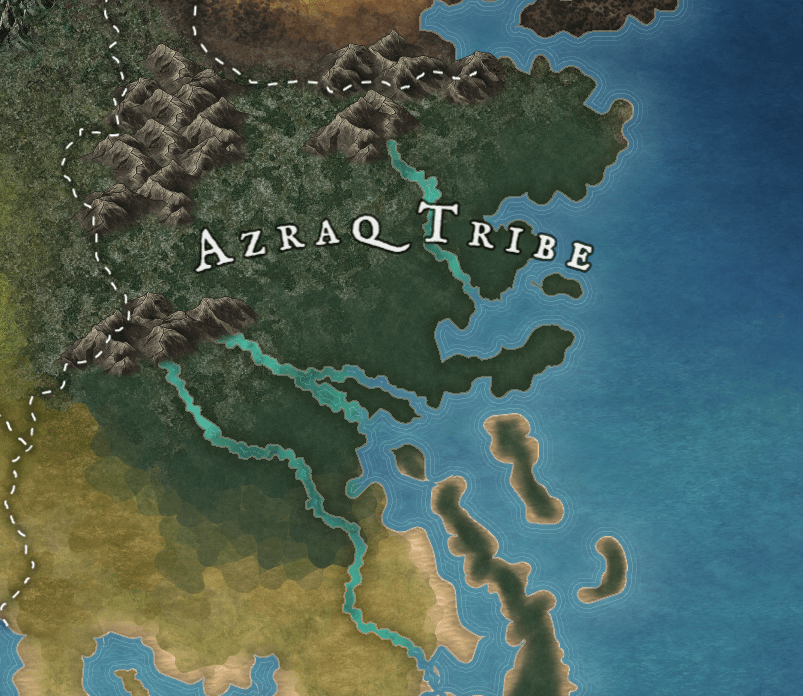
The Azraq Tribe has had a convoluted history of political upheaval. It is home to the largest population of humans of any of the tribes, which leaves it in a complex state bordered by powerful soulfire nations such as the Akhdar and Arjowani tribes. Historically, it has been known as a type of democracy, somewhere in between the laissez-faire attitude of the Dhahabi Tribe and the strive for order and hierarchy of the Akhdar Tribe. However, the previous caliph, Faruk al-Qatil, swept the nation with his ruthless dictatorship, turning to civil war and invasion of neighboring tribes.
Faruk al-Qatil was reprimanded for his war crimes against a pacifist nation and locked in the confines of a solitary prison cell thanks to the effort of Theandrios Kairakis. With this justice-driven campaign, Theandrios Kairakis was the first human to rise to leadership in any of the six nations, though the title does not come without jealousy and disdain from the prideful jinn.
Arjowani Tribe of Purple Fire
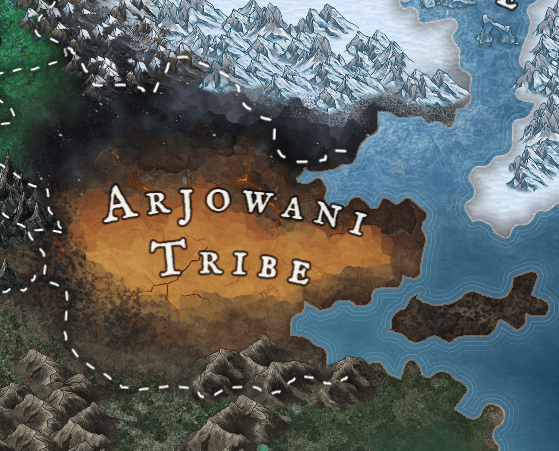
The jinn of the Arjowani Tribe are powerful soulfire users, their violet flames a true danger to even the most seasoned of warriors. Their passionate and nationalist natures have made them averse to interaction and companionship with other tribes. Their government is very loose, highly varying by the caliph who leads them. In recent years, the caliph Junayd al-Gharib has abandoned his people, choosing to retreat to the mountainside along the border after the once-lush nation became a barren wasteland due to an influx of natural disasters that eroded the landscape.
As a result, the locals of the Arjowani Tribe were forced into desolate communities, left to fend for themselves without the help of their ruler. Anarchist groups and revolts against Junayd al-Gharib have sprouted up throughout the wastelands, begging for a change in leadership or revolution.
Abyadh Tribe of White Fire
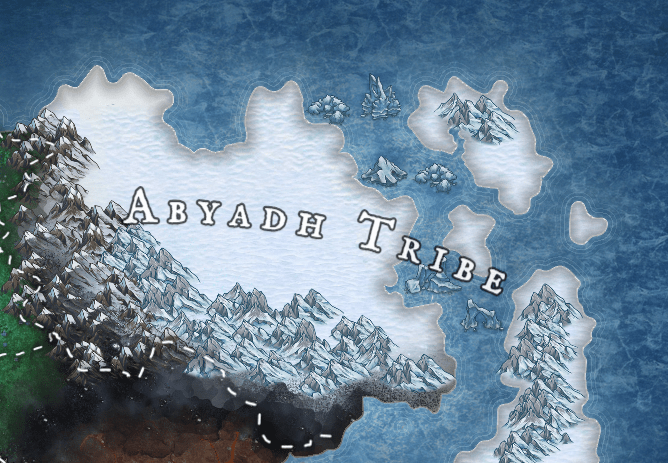
The Abyadh Tribe is a highly elusive totalitarian nation tucked away deep in the far northeast of the taiga forests, far beyond the unforgiving mountain ranges along its border which act as a natural defense against outsiders. It boasts the smallest population out of the six tribes, and is home to some of the most feared warriors of the realm, including supreme leader Iqbal al-Zuhur. He resides with his trusted army generals in the captial, which is the only developed city in the tribe. The rest of the population is scattered in tiny sparse communities throughout the snowy forests and valleys.
“Kutsamak Khagan” is a folk song that roughly translates to “blessed is our supreme leader.” Abyadh music features throat singing and stringed instruments such as the lahut and morin khuur, and is often passed down from parents to their children. These instruments are carved from the thick trees that grow within the snowy forest surrounding the isolated communities.
 sounds of sijjin